
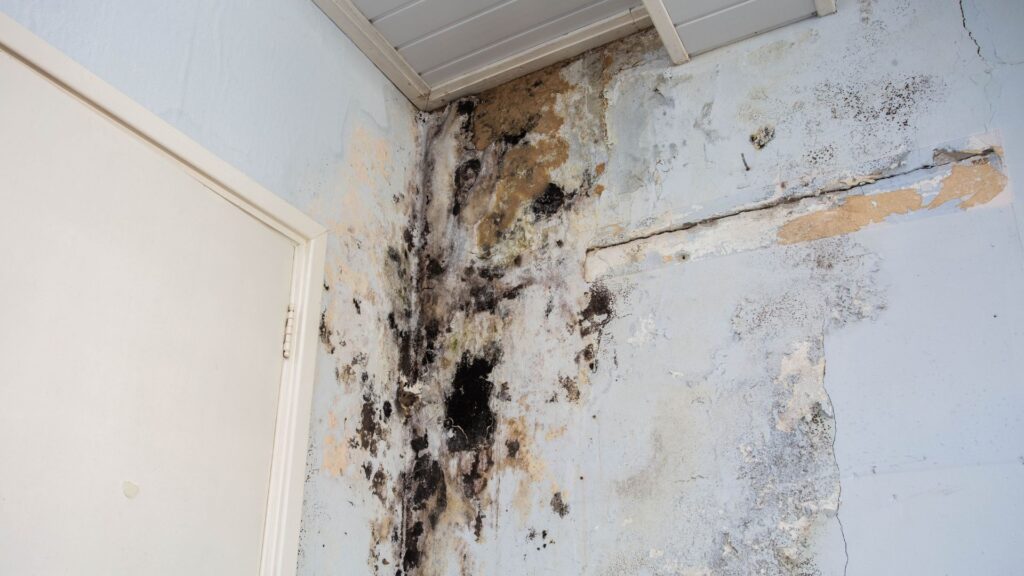
MOLD DAMAGE HOME RESTORATION
Mold can be a serious health risk and expensive to eliminate. We help homeowners document mold caused by an insurable casualty and coordinate remediation and home restoration.
Our residential mold damage restoration approach
Mold remediation is the controlled removal of mold growth and the correction of the moisture that allowed it. Removal without fixing the source is temporary work, because spores are present everywhere and only need moisture, a food source such as paper faced drywall or wood, and a few days to reestablish.
MaxOut Claims performs mold remediation and the reconstruction that follows for homes throughout Westchester County, New York City, Connecticut, and New Jersey. We identify the moisture source, contain the work area, remove affected materials under negative air pressure, clean and treat the remaining structure, and then rebuild the finishes.
Homeowners usually notice mold as a musty smell before they see it. Growth typically hides behind bathroom walls, under sinks and dishwashers, in basements and crawl spaces, in attics with poor ventilation, and behind furniture on cool exterior walls.
- Inspection of affected materials and moisture source
- Documentation suitable for your insurance carrier
- Coordinated remediation and residential rebuild
- Clean, properly finished home restoration
Common causes of mold growth in homes
Nearly every mold problem we investigate is a moisture problem first. Finding the water is the actual diagnostic work.
- A prior water loss that was dried incompletely or only on the surface
- Slow plumbing leaks beneath sinks, behind toilets, and inside walls
- Roof leaks and ice dam damage that soaked ceilings and insulation
- Basement and crawl space humidity and groundwater seepage
- Bathroom exhaust fans that are missing, undersized, or vented into the attic
- Condensation on cold exterior walls, windows, and uninsulated pipes
Health and safety considerations
Mold exposure commonly causes allergy type symptoms such as congestion, coughing, eye irritation, and skin reactions, and it can be more serious for people with asthma, respiratory conditions, or compromised immune systems. Because of that, proper containment matters as much as the removal itself.
Cutting into moldy drywall without containment sends spores through the rest of the house. Our work areas are sealed, held under negative pressure with HEPA filtration, and cleaned before the containment is taken down.
How professional mold remediation works
The sequence is what separates remediation from cleaning. Each step exists to keep the problem from moving elsewhere in the home or coming back.
- Moisture source identification and correction, first and always
- Containment of the work area with sealed barriers and negative air pressure
- HEPA filtration to capture airborne spores during removal
- Removal and bagged disposal of affected porous materials
- HEPA vacuuming, cleaning, and antimicrobial treatment of remaining surfaces
- Drying and humidity control to remove the condition that allowed growth
- Post remediation verification before the space is rebuilt
Mold and homeowners insurance
Coverage for mold depends on the cause. When mold results from a covered sudden event, such as a burst pipe that was addressed promptly, remediation is often covered, though many policies cap mold coverage at a specific dollar limit. Mold traced to long term humidity, seepage, or deferred maintenance is usually excluded.
That makes documentation of the moisture source especially important. We photograph the source, record moisture readings, document affected materials, and write a scope that separates remediation from the reconstruction that follows.
Our mold damage restoration process, step by step
- 1
Inspection and moisture diagnosis
Locate visible and hidden growth, and identify the water source feeding it.
- 2
Containment setup
Seal the work area and establish negative air pressure with HEPA filtration.
- 3
Removal of affected materials
Cut back and bag contaminated drywall, insulation, carpet, and porous materials.
- 4
Cleaning and treatment
HEPA vacuum, clean, and apply antimicrobial treatment to remaining structural surfaces.
- 5
Drying and moisture correction
Repair the leak, control humidity, and dry the assembly to a documented standard.
- 6
Rebuild
Insulation, drywall, paint, flooring, and trim restored with proper ventilation in place.
What affects the cost of mold damage restoration
No two losses price the same way. These are the factors that move the number most, and each one appears as a documented line item in the scope we prepare for your home.
- Square footage of affected material and number of rooms involved
- Whether growth is surface level or inside wall and ceiling cavities
- Containment complexity and the level of protection required
- Repairs needed to eliminate the moisture source
- Ventilation, dehumidification, and drainage improvements
- Extent of the finish rebuild after remediation is complete
Where we work
MaxOut Claims is a licensed residential general contractor serving homeowners throughout Westchester County, all five boroughs of New York City, Connecticut, and New Jersey. If your home is in our area, we will come out, inspect the damage, and document what we find.
Not sure whether mold damage is what you are dealing with? Tell us what you are seeing and we will help you figure it out.
Mold Damage questions homeowners ask us
More answers are on our frequently asked questions page, or read the home restoration blog for detailed guides.
Related mold damage topics
- mold remediation near me
- mold removal company
- black mold removal
- mold remediation cost
- basement mold removal
- attic mold removal
Get Help With Mold Damage Restoration
Tell us about the damage to your home. Our licensed residential restoration team will follow up to schedule an inspection and prepare a detailed repair scope.
Add Us to Your Phone
Save our contact information now, so it is ready the moment damage happens to your home.