
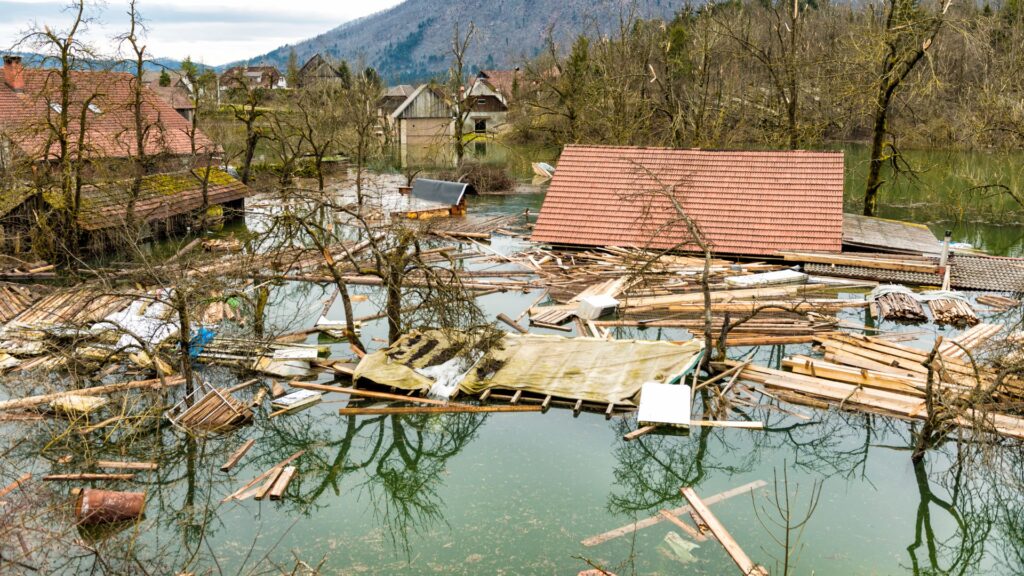
FLOOD DAMAGE HOME RESTORATION
Flood damage can be difficult to navigate alone. Our residential restoration experience helps homeowners understand the damage and plan the right path back to a fully restored home.
Our residential flood damage restoration approach
Flood damage restoration is different from ordinary water damage work because floodwater is treated as contaminated. Water that has traveled across ground, roadways, or a sewer line carries bacteria, fuel, fertilizer, and silt, so porous materials it touched are removed rather than dried, and the affected area is cleaned and treated before anything is rebuilt.
MaxOut Claims performs flood damage restoration and basement flood cleanup for homes throughout Westchester County, New York City, Connecticut, and New Jersey. We document the water line, inventory the affected materials and contents, remove what cannot be saved, dry and treat the structure, and rebuild the finished space.
Basements take the worst of it in our region. Heavy rain, an overwhelmed storm drain, a sump pump that failed during a power outage, or a sewer backup can put several inches of water against drywall, insulation, mechanicals, and everything stored on the floor.
- Full inspection of structural and mechanical impact
- Documented loss inventory and repair scope
- Drying, demolition, and residential reconstruction planning
- Home restoration performed by licensed professionals
What floodwater damages first
Floodwater wicks upward through porous materials, so the damage line inside the wall is usually higher than the visible water line on the surface.
- Drywall and insulation, which wick water well above the visible line
- Subfloor, sill plates, and framing in contact with standing water
- Furnace, boiler, water heater, and electrical panels and circuits at low elevation
- Carpet, padding, and any porous flooring assembly
- Cabinetry, built ins, and stored contents and documents
- Crawl space vapor barriers and the soil beneath them
Sanitizing and health considerations
Because floodwater and sewer backups are categorized as contaminated, restoration includes more than drying. Affected porous materials are removed and disposed of, remaining structural surfaces are cleaned and treated with antimicrobial products, and the space is dried to a documented standard before reconstruction begins.
Skipping this step is what leads to persistent musty odor and mold growth inside newly finished walls a few months later.
Flood insurance versus homeowners insurance
This is the most common surprise homeowners face. Standard homeowners policies exclude surface flooding, which is covered instead by a separate flood policy, often written through the National Flood Insurance Program. Water that backs up through a sewer or drain is a different category again and typically requires a sewer and drain backup endorsement, while a sump pump failure may fall under a water backup rider.
We document the source, the water line, the affected materials, and the resulting scope so the loss is described accurately regardless of which policy responds. If you are unsure what coverage you carry, bring us your declarations page and we will walk through the damage with you.
Rebuilding a basement to resist the next flood
When a finished basement is rebuilt, there is an opportunity to make it more resilient. Where it fits your plans and budget, we recommend materials and details that recover faster from water contact.
- Closed cell foam or mineral wool in place of fiberglass at lower walls
- Cement board or moisture resistant assemblies for the lowest wall section
- Tile, luxury vinyl plank, or sealed concrete instead of carpet
- Elevated mechanical equipment, outlets, and shelving
- Battery backup or water powered backup for the sump pump
- Regrading, gutter extensions, and improved exterior drainage
Our flood damage restoration process, step by step
- 1
Safety and power check
Confirm electrical safety and stability before anyone enters standing water in the home.
- 2
Water removal
Pump out standing water and extract from floors, cavities, and finished assemblies.
- 3
Documented loss inventory
Photographs, water line measurements, and an inventory of affected materials and contents.
- 4
Removal and sanitizing
Remove contaminated porous materials, then clean and treat remaining structural surfaces.
- 5
Structural drying
Dehumidification and air movement monitored until framing and slab reach dry standard.
- 6
Reconstruction
Insulation, drywall, flooring, trim, and mechanical reconnection to complete the restoration.
What affects the cost of flood damage restoration
No two losses price the same way. These are the factors that move the number most, and each one appears as a documented line item in the scope we prepare for your home.
- Depth of water and how high it wicked into the walls
- Whether the water was clean, gray, or sewage contaminated
- Amount of finished space, cabinetry, and flooring affected
- Damage to furnace, boiler, water heater, and electrical systems
- Contents inventory, cleaning, and disposal
- Resilient materials and drainage improvements included in the rebuild
Where we work
MaxOut Claims is a licensed residential general contractor serving homeowners throughout Westchester County, all five boroughs of New York City, Connecticut, and New Jersey. If your home is in our area, we will come out, inspect the damage, and document what we find.
Not sure whether flood damage is what you are dealing with? Tell us what you are seeing and we will help you figure it out.
Flood Damage questions homeowners ask us
More answers are on our frequently asked questions page, or read the home restoration blog for detailed guides.
Related flood damage topics
- flood damage restoration near me
- basement flood cleanup
- flooded basement repair
- sewer backup cleanup
- water removal service
- flood damage insurance claim
Get Help With Flood Damage Restoration
Tell us about the damage to your home. Our licensed residential restoration team will follow up to schedule an inspection and prepare a detailed repair scope.
Add Us to Your Phone
Save our contact information now, so it is ready the moment damage happens to your home.